
Author’s Note:
This essay reflects my personal experiences, internal patterns, and growth across many relationships over time. It is written from my perspective and is not intended to describe, diagnose, or portray any specific individual. Any similarities are coincidental. The focus here is on my behavior, my accountability, and my healing.

Better or worse, for richer or poorer, in sickness and in health, to love and cherish, till death do us part.
This traditional wedding vow seems simple. In partnerships, we show up as partners when our partners need us to. They show up for us when we need them to. When shit hits the fan for one of us, the other one steps up. We do it out of love and care for the other person. And ultimately, we believe we will do this until one of us croaks.
In some relationships, I thought I was really good at many things:
A good empathizer.
A problem solver.
A fixer.
An advice giver.
I was organized.
I was responsible.
I was proactive.
I wanted everyone to feel safe.
I was cooperative.
I was flexible.
I was very easy going.
I was loyal.
I was generous.
I was very forgiving.
Simple enough right? Who wouldn’t want a partner with those traits? It seems like everything you need for a happy, healthy, loving relationship.
I wasn’t raised in a religious manner, but I was raised in a very conservative type ideology where the “man of the household” was responsible for hunting and gathering. Not literally, but generally speaking, it was ingrained into my psyche that I would always have the role of “bread winner.”
This expectation was baked into me—the money and resources I earned were solely to keep the partnership/family alive and safe. To meet all of their needs at all times. To work 16 hours a day if I had to, to make sure everyone was fed, lights were on, bills were paid, cars were running, healthcare was covered, and a roof was over everyones heads.
If I wanted the benefits of the love and intimacy of the partnership, I believed that I had to make these sacrifices as the hunter/gatherer. It was a requirement for the closeness I desired. I also needed to be good at all the things I listed above. I believed that true love asked these things of me. So I went above and beyond, in relationship after relationship, to do everything in my power to be the very best at all of it.
It was after some major relationship losses, that I realized I was good at all of these things AND I also had some major problems related to it:
I was neglecting my own needs.
I was feeling resentful.
I was getting burned out.
I was having difficulty trusting my partners.
I was creating tension in the relationships by trying to manage the safety of them.
I was denying/minimizing problems in the relationship.
I was taking on too much responsibility.
I had very low self-esteem/worth.
I was deathly afraid of rejection/abandonment/loss of love.
I had extreme difficulty with expressing my needs.
When everything slowly fell apart, my identity/ego died right in front of my eyes. I realized that I had completely lost myself in the process of making sure everyone elses needs were met. This happened with some partnerships, some jobs, some friendships, and even with my children. This pattern existed in many parts of my life.
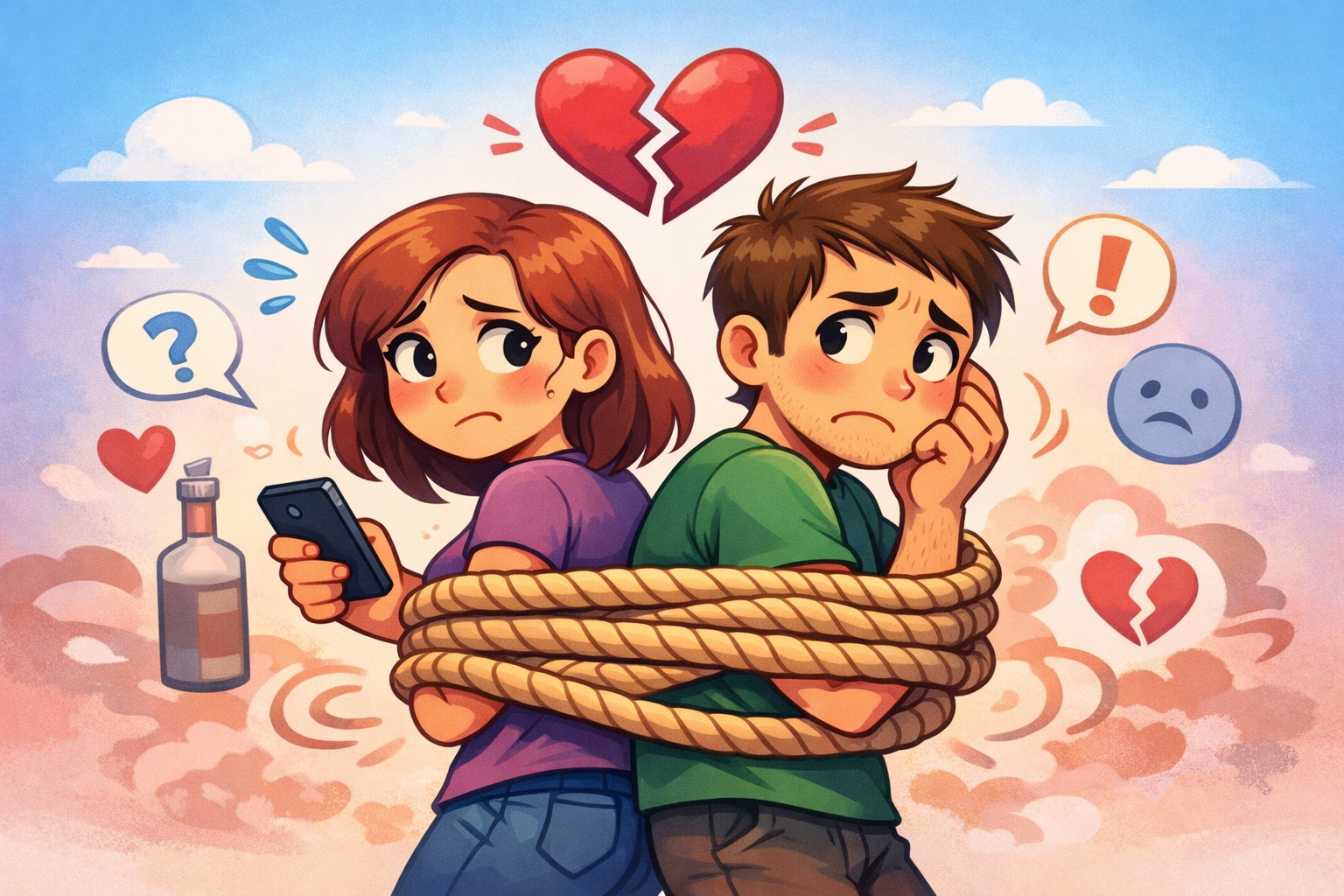
I didn’t realize I was paying until I was completely empty. My therapist calls this pattern, “Codependency”.
This behavior pattern is another type of addiction, that has been added to the stack of addictions I have struggled with for most of my life. People, like me, who grew up in difficult, unpredictable, and unstable environments tend to develop codependent traits as a means to cope. We learn to sacrifice our well-being for external validation, and it is rooted in traumas and poor emotional boundaries from our upbringing.
Children, like I once was, who have had dysfunctional childhood familiy dynamics, including neglect, emotional unavailability, abuse (of any kind), or parents living with addiction or mental illness, learn to prioritize other peoples needs over their own, as a means of survival. These experiences teach us that love, approval, and safety come from meeting someone else’s needs, and not from our own self-care.
We put on everyone else’s oxygen masks, only to find there isn’t one left for us. And eventually we can’t breathe and suffocate.
“Codependency, also known as relationship addiction, takes place when one person believes it’s their job to “save” another person by attending to all of their needs. A codependent person builds their identity around this purpose and takes on a self-sacrificial role in the relationship.
Source: https://www.helpguide.org/relationships/social-connection/codependency
Codependency is often used to describe a person who enables their partner’s addiction by covering up their problems or shielding them from the consequences of their behavior. However, it can take on many different forms, depending on the relationship. For example, if you’re codependent, you might take on excessive household responsibilities, fail to stand up for yourself, or end other friendships just to maintain your partner’s approval. This unhealthy dynamic isn’t limited to romantic relationships. You can also have a codependent relationship with a family member or friend.”
Well, there’s definitely a pattern here, Tukayote.
Some partnerships I have been in had some very distinct things in common. Things that were repeated. Not coincidentally.
Patterns.
First, there was always some kind of crisis, drama, emergency, or other dilemna going on for some of my partners. It literally never ended. One thing would get “resolved” and seconds later, a new thing would suddenly emerge. Continuous fuckery and chaos in some of their lives.
These things included physical health problems, childhood traumas, adult traumas, job/coworker/boss problems, educational/school problems, substance/alcohol abuse, mental health challenges, problems with their friends/family/children/exes, problems with their doctors/therapists, pet issues, car problems, spending/debt problems, housing insecurities, legal problems, their weight/appearance, problems with everything I did and was, you name it–if it was a problem to be had, some partners always had it. Always.
On top of all that, some partners believed their own narrative that they were helpless, innocent, targeted victims.
And yes, we all have a steady stream of shit we have to deal with on a daily basis. The “shit” they were dealing with had a very distinct smell though, which leads me to the second part.
Second, some partners never had the capacity, resources, or supports to handle their own problems. It didn’t matter what they had available to them, their problems were always more than they could handle. They never had enough of whatever they needed to handle their problems.
Third, when some partner’s problems became more than they could manage, they heavily leaned on everyone they could to help them with them. Often times using high-pressure, false narratives and lies, sad stories, and manipulation to get what they needed. When people outside of the partnership couldn’t help, were completely exhausted from helping in the past, or set boundaries, they turned to the person closest to them to solve all of their problems—me.
No pressure at all. LOL.
Fourth, and final, I would then feel compelled to do everything I could to empathize, problem solve, fix, give advice, keep everyone safe, manage the situation, keep things in control, be cooperative, be flexible, avoid conflict, protect them from consequences, and keep everything flowing nice and smooth. I would do this without any boundaries or limits and give until I couldn’t give any more.
After all, that is what I was conditioned to do growing up. You hunt, gather, and provide everything your partner needs. If they are worse off than you, sicker than you, poorer than you–you balance it out. You are required to make sacrifices in the name of love and the sanctity of the relationship.
This is what love is, right? The beautiful unconditional love that the best partnerships are made of, right?
Wrong. This isn’t unconditional love at all.
This is the recipe for disaster.
This is the recipe for losing yourself completely.
This is the recipe for extreme deterioration of your mental and physical health.
This is fear of abandonment, rejection, and loss of love–manifesting as giving love and supporting your partner, unconditionally.
Depending on the situation, I demonstrated codependency in four different ways
Authors Note: These experiences are drawn from multiple relationships over many years and are not intended to describe any one person. I’m describing my behaviors, not assigning blame or wrongdoing to anyone else.
1. The Caretaker / Rescuer
Simply put, my self-worth and self-esteem was cemented in feeling needed and wanted. I would go out of my way to fix the situations of other people. I would make myself indespensable and handle problems that were never actually mine to begin with.
If there was a financial price tag and they couldn’t afford it, I paid for it.
Even if it meant taking out loans, working multiple jobs, cashing out retirement accounts, selling my personal possessions, etc…I did it.
Another way I showed up was as a caretaker. In one instance, one partner of mine would frequently put dinner plans on me. If I didn’t want to cook, they had a silent rule that I would be responsible for the cost of dining out. When we would dine out, they would not only order all the food they wanted, they would also order several cocktails. The bill would be quite expensive, and they always expected me to pay it.
The following day, they wouldn’t feel well. They would admit they shouldn’t have drank the night before, and stay in bed all day to recover. The plans we made for the day would be cancelled, I would stay in bed with them all day to comfort them, and tend to any needs they had throughout the day (getting them food, beverage, medicine, etc…).
This codependent behavior enabled their harmful alcohol use. I wouldn’t do anything I wanted to do for myself that day, and would focus entirely on their needs. I would feel guilty about even thinking about myself during their time of misery.
At times, on that same exact day, the entire situation would repeat itself that evening at dinner time. Over and over. Week after week, month after month, year after year. Their harmful alcohol use, frequently on my dime, and somehow always my responsiblity to care for them in the aftermath—and they knew better but couldn’t stop drinking.
In another instance with some other partners of mine, they would be stressed out about literally anything one could stress over. I would show up as a caretaker and over-empathize, demonstrate compassion for, and try to fix their stressors and problems, while completely neglecting my own, until their stress deteriorated my mental and physical health. Their stress literally amplified my own stress to harmful levels. Things that were never mine to carry.
Relentless rescuing and caretaking would eventually lead to me feeling resentful, burnt out, and at one time in my life, exploding with violent built-up anger. The negative emotions I would carry also led to the problems I had with my addictions, as I would try to numb the awful feeling I felt inside. My sobriety would often be endangered.
No matter how much I rescued and caretook—there was always a new crisis, drama, emergency, or other dilemma. Always new chaos.
As some of the partners would become accustomed to my caretaking and rescuing, and expect it at all times, even bigger problems and requests would emerge, and require increasingly higher amounts of my support and resources. It was if the bar was continually being raised. Eventually it becomes so high that you can never do enough to reach it.
I kept quiet and avoided talking about being completely maxed out.
All of the caretaking and rescuing, was rooted in fear. Fear of abandonment, rejection, and loss of love if I didn’t continually save them from their problems. To hell with my own problems, their problems always came first, because fear of losing the partnership was my biggest priority.
2. The Controller / Perfectionist
This one didn’t show up often, but when it did, it was almost always about things like household management and maintenance, auto maintenance, financial management and bills, and health management.
For example, when I was a homeowner, I took on all the responsibility of maintaining the home and landscaping, making sure that utilities were paid, the gutters were cleaned, pests were exterminated, faucets weren’t leaking, light bulbs worked, weeds didn’t take over, the lawn stayed green and mowed, etc. I wanted to make sure that the home and property were under control and kept in a predictable state.
When I was in some partnerships that involved multiple auto mobiles, I took on the responsibility of oil changes and other maintenance, simple repairs, tire rotations, installing upgrades, cleaning the vehicles, etc… I did it to make sure that the vehicles were operational and risk of expensive and stressful vehicle emergenices was managed and predictable.
With finances, in some partnerships, I was the bookkeeper for the partnership. I had control over the budget and I was a perfectionist with it. Strict budgets, expense limits, etc. I didn’t want any unpredictability when it came to money and the safety of it. I was extremely rigid about paying bills on time and in full. No exceptions to any of it. Full control and perfectionism.
This financial obsessiveness is a trauma response from childhood that I have recently identified.
When it came to the health of some of my partners, I was always quick to recommend healthcare providers, treatments, and plans of care. I would follow up with them and make sure they were doing everything the way I recommended or that their doctor recommended. I took on management (control) of their health care because I didn’t want any unpredicability around it and I didn’t want to have to do more caretaking than I was already doing.
The controlling and perfectionist behavior was also rooted in fear. Fear of unpredicability and loss of control. I didn’t trust that some of my partners would take care of these things, so I took it all on myself. I had fear of additional needs to rescue and caretake, and the fear of the negative emotions I would carry as a result. I spent so much time and energy trying to keep things stable. It cost me poor mental health as a result.
My inability to trust some of my partners and my need to control everything was a trauma response from not being able to trust my parents as a child and not being able to control my parents’ unpredictable behaviors.
The more I tried to perfectly control things in some of these relationships, the worse I would feel. As with anything you try to have control with in life, shit inevitably happens, and you eventually lose control. Nothing in life can be done perfectly all the time. My need to control and keep everything predictable and perfect created alot of tension between me and some of my partners.
Why? Because nobody wants to be controlled at the end of the day. Especially by their partner.
And losing that control can feel like falling
But once you learn to let go
That’s when you start to fly
3. The Lost Self
I often struggled to know who I was outside of some of my relationships. My entire identity at times was consumed around the codependent roles I played in these relationships. When I slowly realized all of these patterns of behavior, and stopped doing them with some of my partners, I was faced with an identity crisis. The crisis was because I realized I didn’t know who I was when I wasn’t performing one of these behavior patterns.
This showed up primarily for me as avoidance in some of my partnerships:
I avoided conflict at all costs.
I didn’t rock the boat.
I hid my true feelings about many things.
I relied heavily on other people for decisions and validation.
I allowed my identity to become indistinguishable from those around me.
I was overly cooperative.
I was extremely flexible.
I was far too easy-going.
I never disagreed.
I didn’t share my wants and needs.
I was a “yes man.”
I never communicated with some of my partners about any problems I was having.
Instead, I always tried to keep the peace, even when I unhappy inside.
I told myself that keeping the peace was a sacrifice necessary for love. It was also deeply rooted in fears of abandonment, rejection, and loss of love.
I felt that if I ever spoke up about anything, or heaven forbid, I started a conflict—that all hell would break loose, there would be irreperable damage, and I would feel extreme amounts of guilt and shame.
The reality is, by giving my identity away to others and avoiding nearly all important communication, all hell would eventually break loose and some of the partnerships would rupture irreparably.
When I realized that the hurt and damage was because my avoidance and low self-esteem/worth, I would be smothered in guilt and shame. Fears would become realities.
Keeping the peace at all costs was another childhood trauma response formed by my unpredictable and emotionally abusive parents.
4. The Enabler / People Pleaser
Authors Note: This is how these dynamics felt and functioned to me at the time.
This one is a bit like a combination of the first three in many ways. Enablers protect people from their consequences, often without even knowing they are doing it. We might make excuses for them, finacially support unhealthy behaviors, cover up for them, lie for them, let them misbehave with us or disrespect us, etc…
This showed up as me saying yes more often than no. Some of my partners would begin to expect this, and then the cycle would be established and very hard to break. I would accept their abuse, give them my power and control, and allow them to disrespect me.
I would allow some of them to manipulate and gaslight me. I would allow and tolerate emotional abuse. I wouldn’t be assertive and I would take on passive roles. I would let some of them blame, shame, and threaten me. There were often ultimatums and triangulations, and I would play their veto games.
I feared the potentially painful consequences that would result from them being angry or disappointed in me for not agreeing with them, saying no to them, or not doing what they wanted me to do. This behavior, like all of the others, was deeply rooted in childhood fear of abandonment, rejection, and loss of love.
My self-esteem/worth would eventually be destroyed because I would get abused by the very same people I was relentlessly trying to please. I would bargain with myself, and tell myself that what they were doing to me “wasn’t that bad.”
I would go to virtually any length to avoid conflict, also another trauma response from childhood.
The Big Ah-ha Moment
Before the big ah-ha moment, I was at a sacred place of mine, and felt incredibly at peace standing there alone. I didn’t have to make sure other people were having fun, that we were adhering to an itinerary, or worry at all about anyone other than myself.
Moments later, I was consumed by emotions and found myself crying for a few hours. I didn’t know why the emotions hit me at the time, but I realized it was because I had to return to performing, caretaking, rescuing, and abandoning my identity, wants and needs. This realization is fucking overwhelming when you just had a moment of peace, calm, and doing whatever you wanted and needed, just for yourself.
After that, I was journaling and everything clicked all of the sudden. Not only did I “have a type” of partner in some partnerships I had been in, I also had several patterns of behavior (many are trauma responses) in myself that have existed since early childhood:
I avoided difficult conversations.
I didn’t use/keep boundaries.
I didn’t express my wants, needs, emotions, and feelings.
I relentlessly rescued.
I had an anxious attachment style.
I performed to make others happy.
I frequently responded from traumatic history.
I rebounded into very intense partnerships within weeks of one ending.
I bailed people out.
I stayed silent.
I waited on people to show up and reciprocate.
I accepted crumbs from them.
I was a hero, savior, and relentlessly patient with their problems.
I didn’t let them feel their feelings.
I didn’t let them face their consequences.
I didn’t let them learn and grown without me bleeding for them.
I didn’t let them clean up their own messes.
I didn’t let them demonstrate their promises by keeping them.
Even as some of my partnerships changed, all of these patterns of mine stayed the same. The real cost underneath each of these patterns was the loss of my mental health, deteriorating physical health, and the complete destruction and death of my identity.
The even bigger cost was the abandonment, rejection, and loss of love that kept occuring over and over.
A lifetime full of heartbreak, resentment, regret, remorse, guilt, and a heaping dose of shame.
I wasn’t unlucky, I was consistently living in my patterns and consistently inviting some unhealthy types of people and their chaos into my life.
What has changed?
Once I realized my patterns, I stopped the behaviors. I stopped the online performances, I ended some connections that weren’t right for me anymore. Most importantly though, I stopped doing everything for everyone, and started focusing entirely on myself. Recently, I wrote a manifesto that sums up nearly every lesson I have learned since the moment of clarity, and all of my boundaries with myself and other people—you should give it a read.
At first, it felt cruel to just abandon relationships with some of my friends, partners, jobs, etc… It actually was me demonstrating self-love and self-respect for the first time ever in my life.
The relationships that depended on my codependent behaviors, gone.
The relationships that depended on me abandoning myself and my identity for them, gone.
The relationships that involved their substance/alcohol abuse and disrepsected my sobriety, gone.
The relationships where I couldn’t fully trust them, gone.
The relationships that took more than they gave, gone.
The relationships that were triggering and emotionally unsafe, gone.
The relationships where people stole from me, gone.
The relationships where I wasn’t unconditionally loved and accepted, gone.
The relationships where my boundaries and safety weren’t respected, gone.
The relationships that were even 1% unhealthy or questionable, gone.
Walking away from and abandoning some of these relationships taught me that quality over quantity matters with who you keep in your life. Keeping people who aren’t 100% good for you, is self-harm at the end of the day. It erodes your mental health, physical health, self-esteem, self-worth, and self-image.
Keeping unhealthy people long term is eventually impossible, and always ends horrifically with lots of damage and emotional destruction.
Abandoning myself instead of abandoning the bad relationships is the number one cause of the repeated heartbreak I have felt in my life.
I was the cost, then the bill came due.
My past self was a hurting and fearful person. I am grateful for all he did to protect me and I give him grace, because it was all he knew how to do in the moment, with the knowledge he had and the things he had experienced in life. I feel sad that he had to do all of that and endure so much heartbreak and suffering.
My boundaries, as detailed in my manifesto, are non-negotiable moving forward. I am protecting my identity, wants, needs, safety, and health at all costs.
Nobody is allowed to interfere with or stop me in my pursuit of happiness.
Nobody is allowed to take away or control my agency, autonomy, or freedom.
I am no longer willing to pay for love with codependent behaviors or any of the patterns I have identified in my healing journey.
I am no longer willing to pay for love through abandoning myself, my wants, and my needs.
I was the cost.
I’m not paying it again.